
What you are paying for
in a roof.
A roof is the one part of the house that takes every storm first. Two roofs can look the same the day they go on and be twenty years apart in when they come off. On metal the difference is in the steel, the paint, and the screw. On shingles it is in the layers and the nail line. All of it you can check on a sample.
Gauge and what is under the paint.
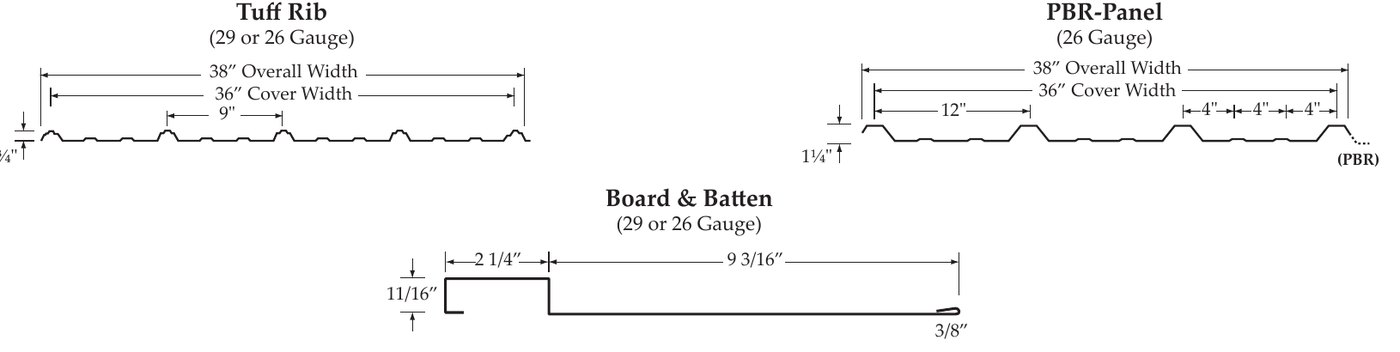
Gauge is thickness, and the number runs backwards. 29 gauge is about 0.014 inch and is the standard for barns and budget roofs. 26 gauge is about 0.018 inch, a quarter thicker, and it is what resists dents, foot traffic, and the wavy look called oil-canning on long runs. Commercial PBR panel is rolled from 26 gauge for a reason.
Substrate is the coating on the bare steel before paint. Galvalume, an aluminum-zinc alloy, resists rust and protects cut edges and scratches. Plain galvanized is cheaper and gives up sooner at exactly those places. The coil tag names it.
Profile is the rib pattern. Rib height is stiffness and water capacity: a 3/4-inch Tuff Rib is a house and barn panel; a 1-1/4-inch PBR rib carries more water and more span. The profile drawings above are the actual spec; a competing panel that is "the same" often is not, and mismatched trim is the tell.
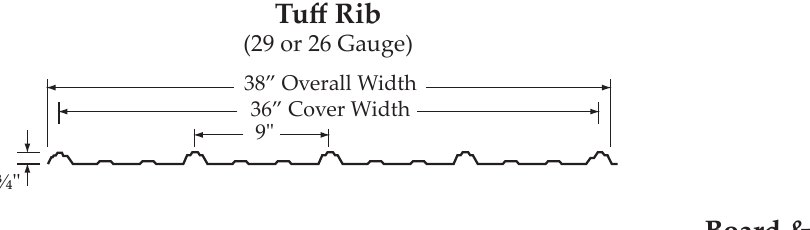
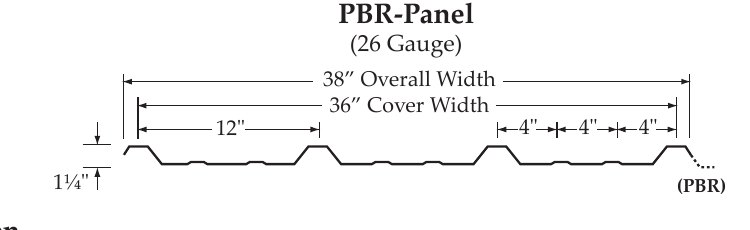
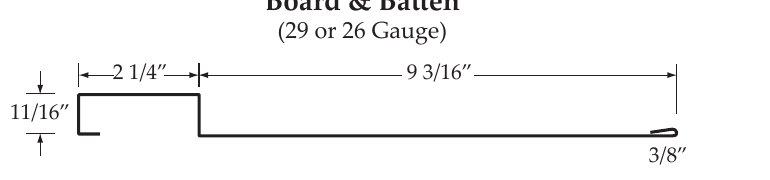
Hold a cut piece of 29 and 26 gauge in each hand and flex them. Then ask to see the coil tag or the mill certificate: it names the gauge, the substrate (Galvalume AZ50 or AZ55 is the number to look for), and the paint system. If nobody can produce a tag, you do not know what you are buying.
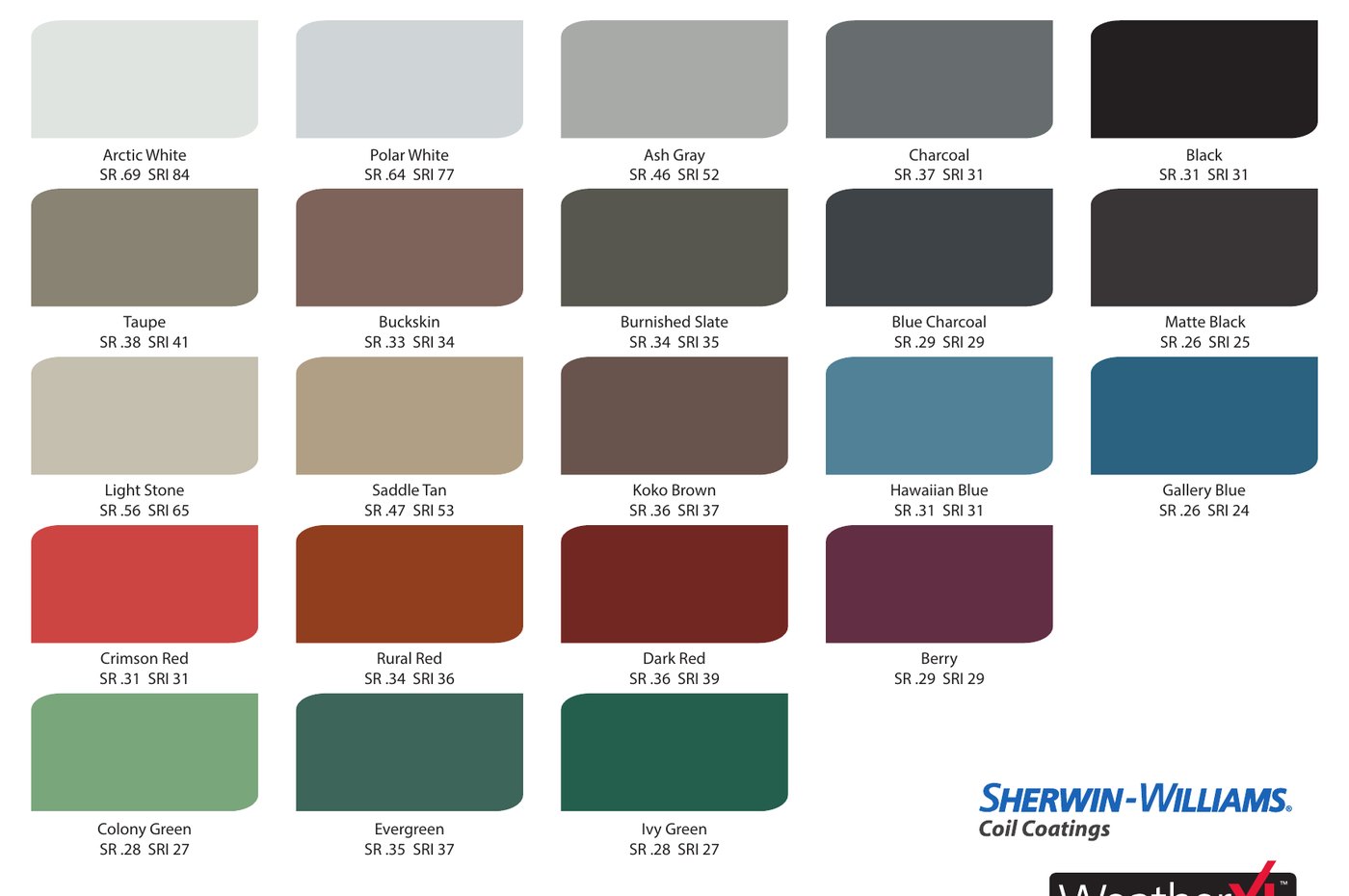
Mill-applied paint, and the two letters that matter.
Quality metal roofing is painted at the mill, on the flat coil, before the panel is formed. That is why it lasts: the paint is baked on under control, not sprayed on a finished panel. The two finish families are SMP (silicone-modified polyester), the hard, scratch-resistant workhorse on agricultural and most residential panels, and PVDF (the Kynar name), the premium that holds dark colors longest against chalk and fade.
Every coating comes with its own warranty, in years, split into film integrity (does the paint stay on) and chalk and fade (does the color stay). Those years are the real spec. "Lifetime paint" is not a spec.
The chart also prints a solar reflectance number under every color. A light stone at SR .56 sends more than half the sun back; a matte black at .26 keeps most of it. In a Tennessee attic that is a real difference, and it is printed right there.
Ask two questions: which finish system (SMP or PVDF, and the maker's name), and how many years the coating warranty runs for film integrity and for chalk and fade. Then look at the SR number under the color you are ordering.
The screw is the wear item.
A through-fastened panel (Tuff Rib, PBR) is screwed to the deck or purlins through the metal. The screw carries a rubber washer, and that washer is the only thing between the hole and the attic. Good washers are EPDM and last a long time; cheap ones crack in the heat. Either way, a through-fastened roof has a maintenance item: walk it, check screws, replace the ones that have backed out or lost their gasket. Plan on it.
Standing seam panels hook to concealed clips and lock edge to edge. No screw goes through the weather surface, the panel can expand and contract with the temperature, and there is nothing to re-tighten. It costs more in metal and in labor. For a house you intend to keep, it is the premium roof.
Screw count and placement matter as much as the screw: on the flat next to the rib, not through the rib, with the panel maker's pattern. A roof with the right screw in the wrong place leaks.
Ask what screw ships with the panel and what the washer is made of. Ask for the fastening pattern sheet. If the answer is "whatever the roofer brings," the roof's weakest part just got left to chance.
A roof is the panel plus everything around it.
Panels rolled to the exact run of each slope have no end laps, and every end lap is a place for water to find. That is the point of a maker that rolls to order from coil rather than stocking 12-foot sheets. It also means the order has to be measured right, which is what our takeoff is for.
Then the parts nobody photographs: matching trim in the same coil (ridge, eave, gable, valley, sidewall, endwall), closures in the rib pattern so the ends are sealed, a high-temperature synthetic underlayment rated for metal, and ventilation sized to the attic. Trim from a different maker in a "close" color weathers to a different color. Closures left out let wind-driven rain and wasps in.
On shingles the same rule holds: starter strip, ice-and-water at eaves and valleys, drip edge, ridge vent, and the hip-and-ridge cap from the same line. The warranty on the shingle usually assumes the rest of the system is there.
Is every slope cut to length? Is trim listed in the same color code as the panel? Are closures, screws, and underlayment on the quote, or "by others"? A quote that stops at panels is not a roof.
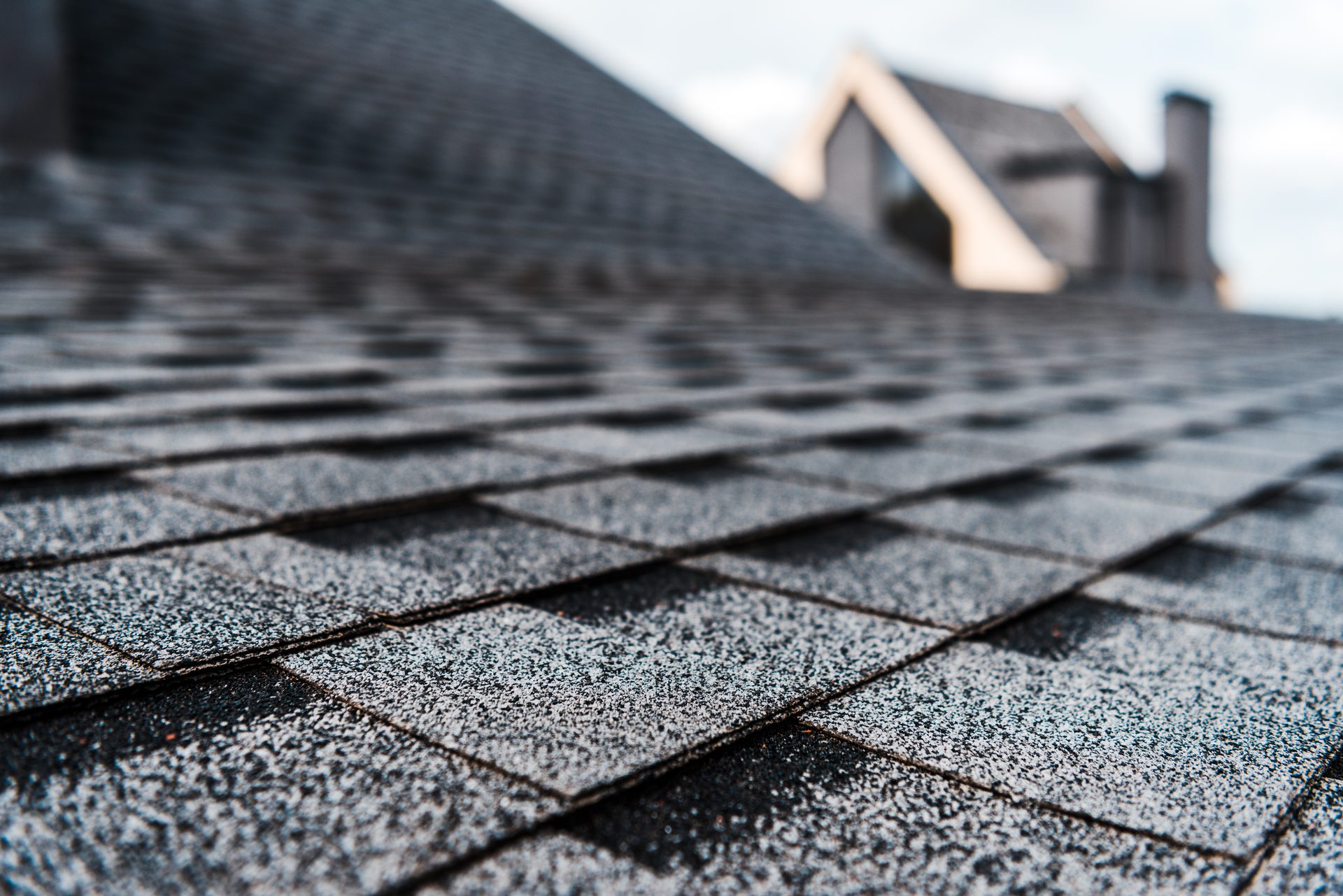
Layers, nail line, seal strip, granules, and the rating on the wrapper.
A 3-tab shingle is one layer with slots cut in it. An architectural shingle is two layers laminated together: heavier, stiffer, with a deeper shadow line and better wind and impact numbers. It is the residential standard for a reason, and it is what Midway stocks deepest in Tamko Heritage and Owens Corning Duration.
The nail zone is where a shingle wins or loses a storm. A reinforced strip on the nailing line (Owens Corning calls theirs SureNail) holds a nail through wind that pulls a plain mat. The sealant strip is what bonds each course to the one below; it needs sun and warmth to set, which is why a late-fall roof is vulnerable until spring. Granules carry the color and the UV protection; algae-resistant granules keep the black streaks off a north slope.
Then the ratings: wind (110 mph standard, 130 with the maker's six-nail pattern), impact (Class 4 is the hail rating that often earns an insurance discount), and fire (Class A). They are on the data sheet, and Lesson 2 shows how to read them.
Hold a 3-tab and an architectural shingle side by side and feel the weight. Find the nail line and look for the reinforcing strip. Then read the wrapper: wind rating, impact class, and the nailing pattern the wind rating requires.
This is the checklist.
| Feature | What a lasting roof has | What to ask |
|---|---|---|
| Steel | 26 gauge where it will be walked or has long runs; Galvalume substrate; a coil tag you can read | Gauge? What is under the paint? Show me the tag. |
| Finish | Mill-applied SMP or PVDF with a coating warranty in years; SR number known for the color | Which finish system? Years for film, years for fade? |
| Fastening | EPDM-washer screws in the maker's pattern, or standing seam with concealed clips | Which screw and washer, and what pattern? |
| Length and trim | Rolled to the run of each slope; trim, closures, underlayment from the same order | Any end laps? Is trim the same coil color? |
| Shingles | Laminated, reinforced nail zone, algae-resistant, rated for wind and impact on the wrapper | Wind rating and nail pattern? Impact class? |
Both roofs are good roofs. Pick on purpose.
A well-installed architectural shingle roof is the right roof for a lot of houses, and Midway stocks it deep. A metal roof costs more on the bid and is the longer roof. Neither choice is wrong. What is wrong is picking the cheaper one without knowing what you gave up, or the premium one without knowing what you bought.
Bring the checklist. We keep panel samples and shingle boards on the floor, and on metal we quote to order through GingCo, so the spec on the quote is the spec that shows up.
Before You Price a Roof
Know what you are putting on the house.
Three short reads on shingles and metal. Written for the builder who has to answer to the money, and for the money.
Frequently Asked
Roof construction, answered.
What is the difference between 29 gauge and 26 gauge metal roofing?
What is Galvalume and why does it matter on a metal roof?
What is the difference between SMP and PVDF paint on metal roofing?
What is the difference between through-fastened and standing seam metal roofing?
What makes one asphalt shingle better than another?
Come See It
Put your hands on it first.
Specs only tell you so much. Come walk the yard and the showroom.
119 Cumberland St, Ashland City. The coffee’s on.