
Read the bid
the way the money should.
A bid is a list of prices. It is also a list of decisions, most of them made by whoever wrote it. This page is how to read one: four questions for every line, the two words that decide a warranty, the two phrases that let a low bid substitute, and an honest list of where the cheaper choice belongs. Written for the builder who has to answer to the money, and for the money.
Ask these of every line where the bids differ.
1. What is its life? Not the warranty term, the years it will do its job on this house before someone pays to do it again. The makers publish the terms; the lessons on this site give them for every material. Pick the number you would defend to a buyer.
2. What does it ask for every year? Repainting, sealing, a service call, filters, or nothing. Upkeep is the cost that never makes the bid and always makes the owner's checkbook. Vinyl never gets painted. Wood gets painted the most. Somebody pays for the difference every year.
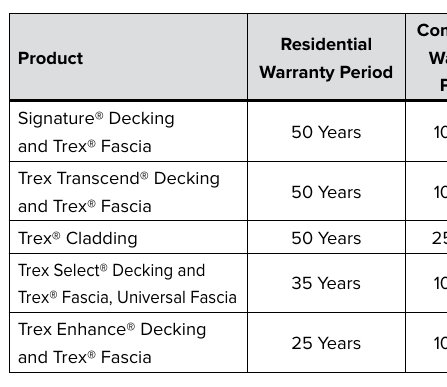
3. Who pays when it fails? Read the warranty table: how many years, prorated or not, labor or material only, and whether it transfers to the next owner. A warranty that does not transfer is worth nothing to an investor who sells.
4. What happens at the sale? An inspector will look at it. Fogged glass, soft trim at grade, a roof with five years left, a deck frame gone under a good board: each is a repair credit on the closing statement. The appraisal will not pay for the better choice. The inspection will charge for the worse one.
Divide the installed cost by the life, add a year of upkeep, and you have the cost per year of service. That is the number to compare. The bid price is what one day costs.
"Or equal" and the allowance.
"Or equal." The two words that let a low bid substitute. A spec that names a window and adds "or equal" has named nothing, because equal is whoever's opinion is holding the pen. Two windows the same size, the same style, and the same price per opening can carry a ten-year glass seal or a twenty, roll-formed cladding or extruded, a warranty that transfers or one that dies with the first owner. If a line matters, strike the phrase or define equal in writing: NFRC numbers, design pressure, warranty years, and transferable.
The allowance. A placeholder dollar amount for a line nobody has chosen yet. A low bid with low allowances has not saved money; it has moved the decision to a change order, priced with the house half built and no competing quote on the table. Before you compare totals, ask what each allowance actually buys. Bring it to our counter and we will tell you.
Years, and transferable.
Every warranty on every line comes down to a table. Years is the term, and whether it is prorated: a 50-year warranty that pays full for five years and then steps down by a couple of percent a year is a five-year warranty with a long tail. Transferable is whether it follows the house. For an investor who sells, a non-transferable warranty ends on closing day, and the buyer's inspector prices that in.
Some warranties also split labor from material. Material-only means the maker sends a replacement and the owner pays a crew to put it in. On siding, roofing, and windows, the labor is most of the second job.
The maker's warranty for every product we carry is on its page or at the counter. Read the table before you read the headline.
Where the cheaper choice belongs.
We sell every tier on these pages and we will quote whichever one fits the house. The cheaper choice is right more often than a supplier likes to say, and a builder who knows where loses fewer bids.
Short hold, plain buyer. A house sold within a year or two to a buyer who does not inspect closely: nothing fails on your watch and the cheap window is the cheap window. Run the numbers at the hold the next owner will have before you decide, but do not let anyone tell you the math is always one way.
Lines the next owner replaces anyway. Builder-grade faucets, light fixtures, carpet in a rental, closet doors. The upgrade money buys nothing that survives the first weekend.
Lines that are cheap to do over. Paint, cabinet hardware, most interior trim. A second job here is an afternoon, not a dumpster.
Where the better spec earns its keep: the lines that are expensive to reach later. Windows, the roof, siding, exterior doors, the frame, and what is in the wall. Then cabinets and the deck frame. Those are the lines to run through the whole-house calculator first.
Bring This to the Meeting
The bid review, line by line.
Print it. Go down the bid with it. Every row is a question the person funding the build is entitled to have answered.
| Ask | Where the answer is | What a bad answer looks like |
|---|---|---|
| Is the product named, or is it "or equal"? | The line item and the spec sheet behind it. | A brand with no series, or any line with "or equal" on a material that is hard to reach later. |
| What does the allowance actually buy? | Take the number to the supplier's counter. | An allowance that covers the cheapest thing in the catalog and nothing else. |
| What life does the builder believe for it? | The maker's literature; the lessons on this site. | A number nobody would say to a buyer with a straight face. |
| What does it ask for every year? | The maker's care instructions and the finish warranty. | "None," on a product that is painted on the wall. |
| How many years, prorated or not? | The warranty table, not the headline. | "Lifetime" with a proration table that starts in year two. |
| Does it transfer? | The warranty's transfer clause. | Original owner only, on a house built to sell. |
| Labor, or material only? | The warranty's remedy clause. | Material only on siding, roofing, or windows. |
| What will the inspector write about it at the sale? | Any home inspector's checklist for that line. | Anything the inspector can see from the driveway. |
| Is the detail bid with the material? | Flashing, clearances, fasteners, and the nail schedule in the maker's instructions. | A material line with no detail line under it. |
| What is it per year of service? | Installed cost divided by life, plus a year of upkeep. The calculators on this site. | Nobody has done the division. |
Before You Price the House
Know what the house costs, not what the window costs.
Three short reads for the builder who has to answer to the money, and for the money. The whole-house math, how to read a bid, and a letter you can hand to your investor.
Frequently Asked
Reading a bid, answered.
What does "or equal" mean on a construction bid?
What is an allowance on a bid, and why does it matter?
What are the two words to look for in a warranty?
What is "builder grade"?
How do I compare cost per year of service?
Stop By the Desk
Let’s talk it through in person.
Bring your plans or just your questions. We’ll get you squared away.
119 Cumberland St, Ashland City. The coffee’s on.