
What you are paying for
in an exterior door.
An entry door is the one part of the house every visitor touches. Two doors can look the same on the truck and be twenty years apart in when one gets replaced. The difference is in the slab and in what is under it and around it: frame, sill, glass, hardware. All of it you can check on a sample in our showroom.
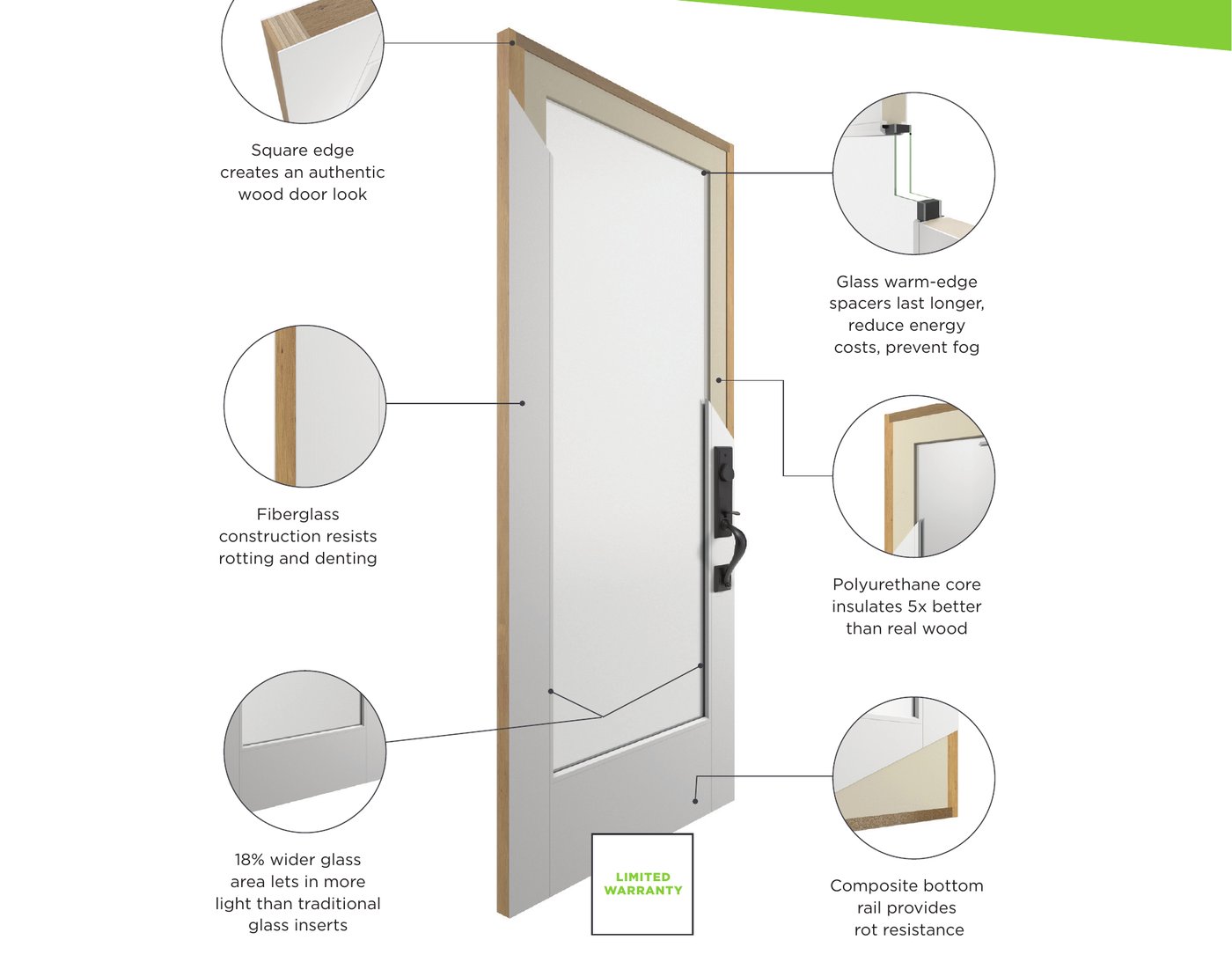
Skin, core, and what is at the edges.
A modern entry door is a sandwich. Two skins, a foam core, and a frame of stiles and rails around the edge that gives the hinges and lock something to hold. The three materials differ in the skin, and the skin decides how the door ages.
Fiberglass skins do not dent, rust, warp, split, or rot; Therma-Tru puts that sentence in its catalog and stands behind it with a lifetime slab warranty. Thicker skin is stiffer: Therma-Tru publishes that its Classic Craft skins are 46 percent thicker than its standard fiberglass. Smooth skins are for paint; woodgrain skins are for stain and carry a real grain texture. Behind the skin is a polyurethane foam core injected under pressure, and both Therma-Tru and Masonite publish that it insulates several times better than a solid wood door.
Steel skins are thin sheet, about 24 to 25 gauge, over the same foam core. Steel is strong and secure and it is the value door. It has two habits. It dents, and where the paint breaks it can rust, starting at the bottom rail where water sits. Masonite's steel spec calls for a composite bottom rail for exactly that reason, and every steel door warranty tells you to finish it within days.
Wood is the door everyone pictures. Woodgrain and Steves build theirs as true stile-and-rail doors with engineered cores under a hardwood face, which fights warping better than solid lumber. Wood needs a finish, and it needs that finish renewed, and it wants a porch or storm door over it. Where it has those, it is a fine door.
Then the part nobody photographs: the lock block. The deadbolt needs solid material to bite, and a door with a small block behind the bore loosens over years of slamming. Therma-Tru publishes enhanced lock blocks and full lock and hinge stiles on its fiberglass doors, and a 4-inch engineered lumber board the full height of the lock side on Classic Craft. Masonite reinforces the lock area with solid internal blocking. Steves uses a 3-inch laminated stile on its top fiberglass lines. On the edges, composite or hardwood stiles and rails mean the bottom of the door cannot rot from the sill up.
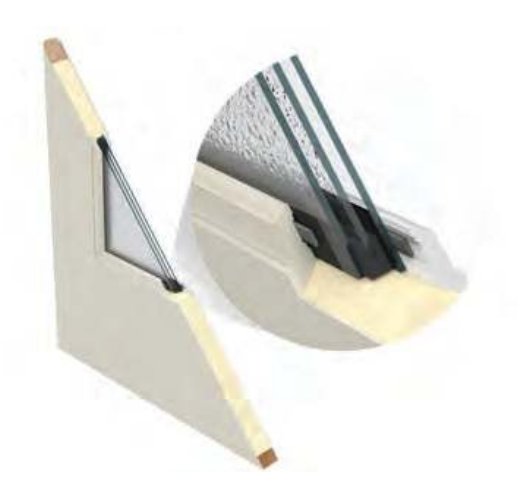
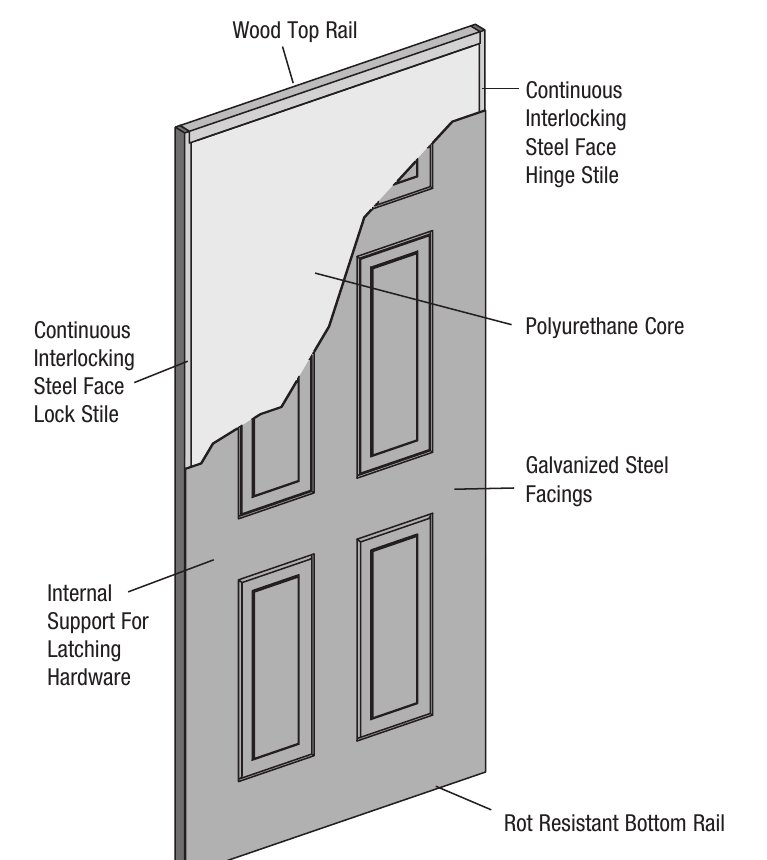
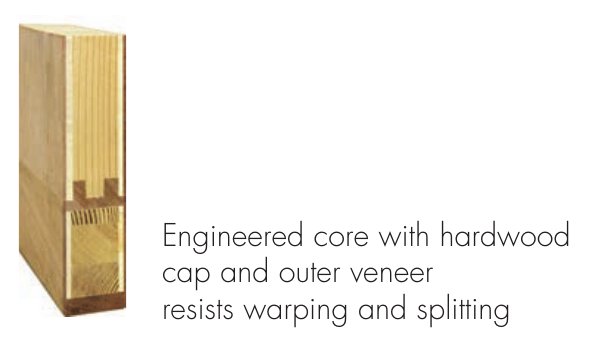
Ask for the corner cutaway. Look at the skin thickness, look at whether the foam fills the whole core with no voids, and look at what the bottom rail is made of. Then rap the lock side with your knuckle at deadbolt height and ask what is behind it. If the answer is "the foam," keep looking.
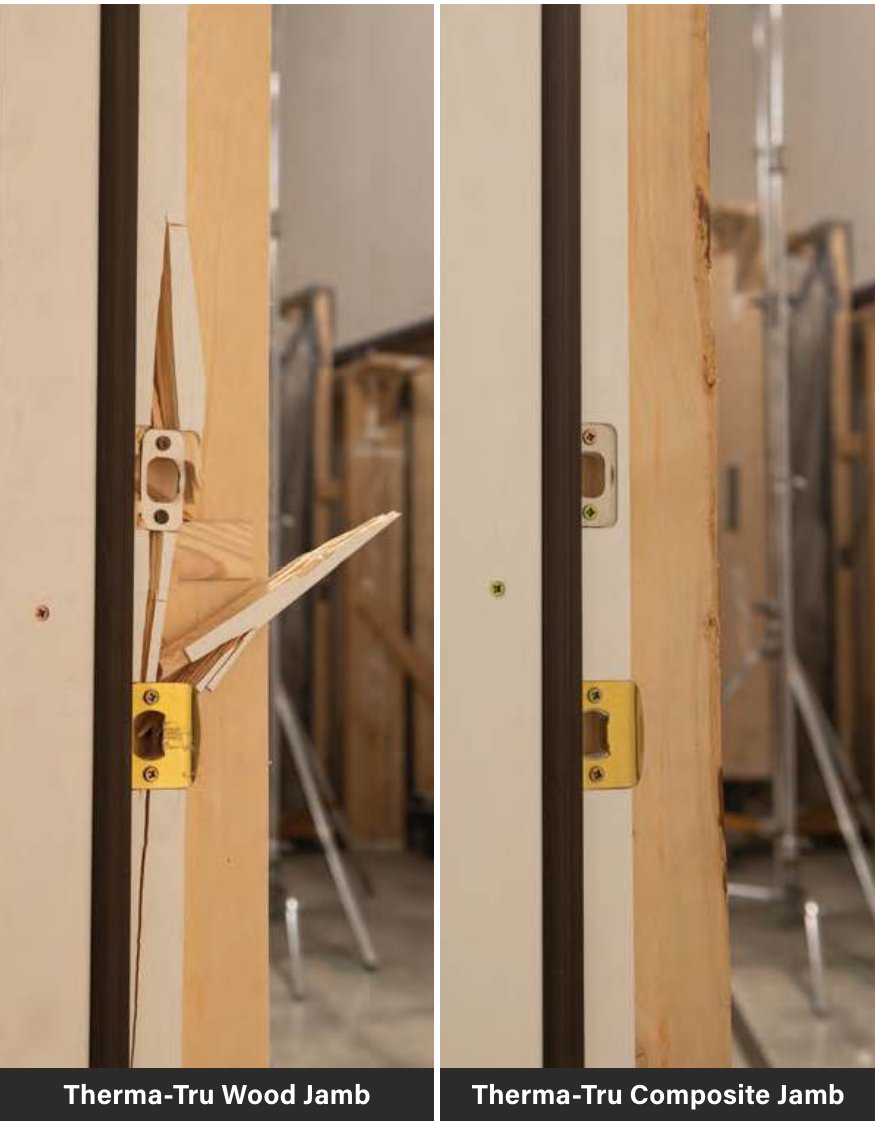
The door is only as good as what it is hung in.
A prehung unit is the slab plus a frame: two side jambs, a head, the brickmould outside, and the sill under it. The standard frame is finger-jointed pine, primed. The bottom six inches of a pine jamb is the first thing on a house to rot, and the finger joints are where it kicks in. Therma-Tru's composite jamb runs full length with no joints and does not absorb water; Masonite's fiberglass units ship with rot-resistant frames. Both makers also offer composite brickmould. Read the quote for the word "composite" or "rot-resistant" on the jamb line. If it says pine, ask.
The sill is an aluminum or composite threshold, and the good ones are adjustable: a row of screws under a cap lets the installer raise the sill to meet the bottom sweep after the house settles. Under the sill goes a sill pan, a shallow tray that catches any water that gets past and drains it out instead of into the subfloor. Therma-Tru calls it out in its complete-system drawing and pays a bigger water-infiltration reimbursement when one is installed. It costs little and is skipped constantly.
The seal is three parts working together: weatherstrip in a kerf around the jamb (foam-filled compression type on both Therma-Tru and Masonite units, and replaceable), a bottom sweep on the slab with two or more fins that ride the sill cap, and corner seal pads tucked where the jamb meets the sill, the spot every leak starts. Therma-Tru's are a 7-shape pad. If the unit on the quote does not list corner pads, the corner is open.
Jamb material. Brickmould material. Adjustable sill, and whether a sill pan is on the order. Corner seal pads. A quote that lists a slab and "prehung" and nothing else has left the frame to chance, and the frame is what rots.
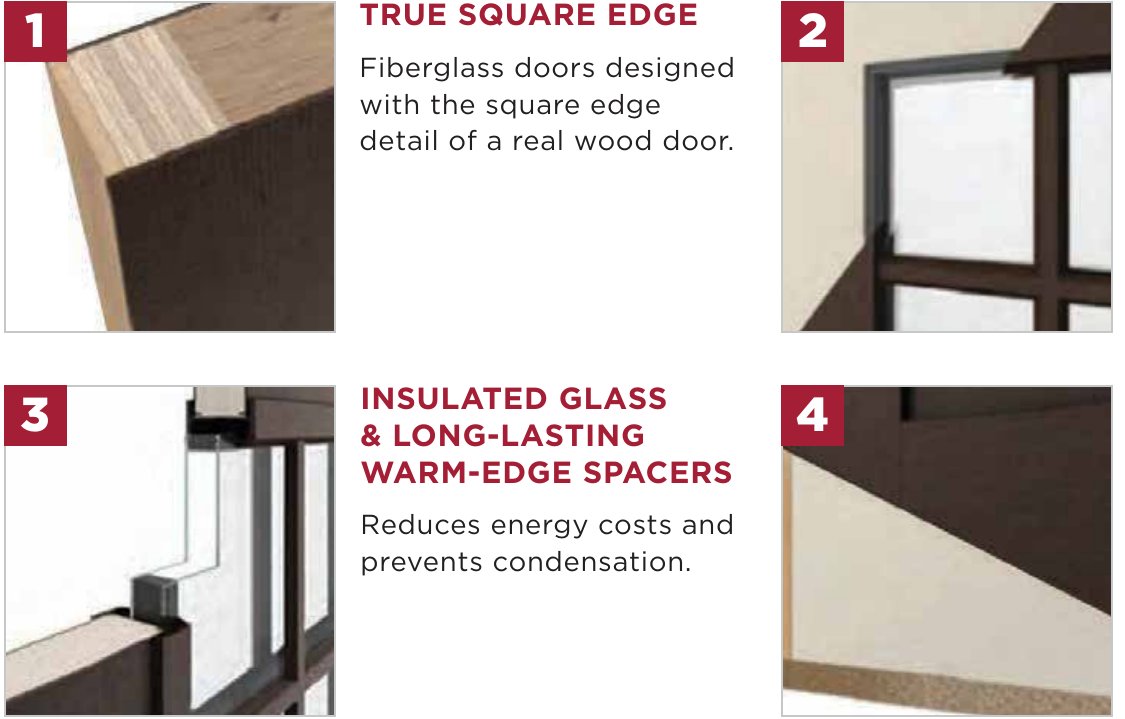
Tempered by code, insulated by choice, and the spacer decides the fog.
Glass in a door is tempered; code requires it, and every maker's lite ships that way. Beyond that the choices are the same as a window. An insulated lite is two panes with a sealed air space and a Low-E coating; decorative and privacy glass on Therma-Tru and Masonite doors is triple-pane, the pattern glass sealed between two tempered sheets so it never needs cleaning and carries the Low-E on the outside. The spacer between panes is where a lite fogs: a warm-edge spacer stays sealed longer and sweats less, and Masonite names it as a feature for that reason. Masonite warrants its insulated glass for 20 years against seal failure. Ask how many.
Flush-glazed glass is set into the slab with no raised frame; Therma-Tru publishes a better U-factor for it than the same lite in a lip frame, and Masonite publishes more glass area for the same door. It is the current look and it is also the tighter door.
Impact-rated glass is laminated, like a windshield, and the door that carries it has a steel plate inside. It is a coastal code item. In Middle Tennessee it is a security or storm choice, not a requirement, and Lesson 2 covers the rating.
Look at the glass edge for the spacer and ask what it is made of. Ask for the NFRC numbers on the exact lite and door size you are ordering; a full-lite door and a quarter-lite door are different doors on the label. Lesson 2 shows how to read it.
Hinges you never think about and a lock you touch every day.
A 1-3/4-inch entry door on three hinges is standard to 7 feet; taller doors get four. Masonite's spec says so, and puts a 12-gauge reinforcement plate behind each hinge. The upgrade is ball-bearing hinges, which carry the weight on bearings instead of the pin. Therma-Tru publishes that its ball-bearing hinges were slam-tested to outlast a family of four; Steves lists them on its better fiberglass lines as the reason a door does not sag. A door that drags on the sill in year eight is usually a hinge, not a door.
The lock is a deadbolt and a latch on most doors, and the strike plate on the jamb is what a kick tests. Long screws into the stud behind the jamb are the cheapest security upgrade there is. The step up is a multi-point lock: one handle throws bolts at the top, middle, and bottom of the door edge, pulls the slab tight to the weatherstrip all the way around, and spreads a kick across three strikes. Therma-Tru and Masonite both offer it on fiberglass; Therma-Tru does not recommend it on steel and will not warrant it there.
Finish matters too. The hardware finish is a separate warranty from the door, and on most makers a short one. Ask.
Swing the sample door and listen to the hinge. Turn the multi-point handle on the floor model and watch the bolts. Look at the strike plate screws on the prehung unit and ask how long they are.
The honest add-on.
Buy the prehung unit unless the existing frame is composite or sound pine with a sound sill. The maker's warranty is written around the whole system: Therma-Tru's covers the slab, hinges, weatherstrip, sweep, sill, corner pads, and rot-resistant frame parts together, and specifically does not cover pine jambs or brickmould. A slab in an old frame carries a slab warranty and an old frame.
A storm door is the one upgrade that protects the door instead of decorating it. It keeps rain and sun off the slab, and on a wood or dark-painted door that is years of finish life. Larson builds theirs on an aluminum frame with tempered glass, a Low-E glass option, and either a full-view glass that swaps for a screen or a retractable screen that rolls up into the top rail. The catch, printed in the Masonite and Steves warranties, is heat: a storm door that cannot vent can cook a dark door in the afternoon sun. Buy one that opens for air.
This is the checklist.
| Feature | What a lasting door has | What to ask |
|---|---|---|
| Slab | Fiberglass or steel skin over a pressure-injected polyurethane core; composite or hardwood edges; a real lock block | Show me the corner cutaway. What is behind the deadbolt? |
| Frame | Composite or rot-resistant jambs and brickmould, not finger-jointed pine | What is the jamb made of? Is it on the quote? |
| Sill | Adjustable sill, sill pan under it, corner seal pads, replaceable compression weatherstrip, multi-fin sweep | Is the sill pan on the order? Are corner pads included? |
| Glass | Tempered, insulated Low-E, warm-edge spacer, triple-pane on decorative lites; NFRC numbers for this exact door | What is the spacer? How many years on the seal? |
| Hardware | Ball-bearing hinges, long strike screws, multi-point lock on fiberglass where it earns its keep | Which hinges? Is the lock covered by the door warranty? |
| Storm door | Aluminum frame, tempered glass, a way to vent | Does it open for air? |
All three are good doors. Pick on purpose.
A steel door on a rental or a garage-to-house opening is the right door, and Midway sells plenty of them. A wood door under a deep porch on a house that will be kept up is a beautiful thing. Fiberglass is the door that asks the least of you over thirty years, and it is what we recommend when someone asks for the long door. None of the three is wrong. What is wrong is buying the cheaper one without knowing what you gave up, or the premium one without knowing what you bought.
Bring the checklist. We keep corner cutaways and prehung units on the floor, and we spec every opening in the design studio, so the door on the quote is the door that shows up.
Before You Price a Door
Know what you are hanging.
Three short reads on entry doors: fiberglass, steel, and wood. Written for the builder who has to answer to the money, and for the money.
Frequently Asked
Door construction, answered.
What is inside a fiberglass entry door?
What gauge is a steel entry door and does it matter?
What is a composite door frame and why does it cost more?
Is a multi-point lock worth it on an entry door?
Should I buy a prehung door or a slab?
Does a storm door protect an entry door?
Come See It
Put your hands on it first.
Specs only tell you so much. Come walk the yard and the showroom.
119 Cumberland St, Ashland City. The coffee’s on.