
The callback
is the expensive one.
Framing is priced by the piece and paid for by the callback. The bid shows what the bunk costs. This page is about what a frame costs by the time the drywall has been patched, the door has been rehung, and the truck has been to the house twice. It is written for the person funding the build as much as the person swinging the hammer.
Three callbacks that never make the spreadsheet.
The drywall. Wet lumber dries in the house. The SFPA's rule is about 1 percent of the size for every 4 points of moisture, and framing settles in at about 12 percent. A stud that went in at 25 percent has 13 points to lose, which is about 3 percent of its width, the first summer the air conditioning runs. The drywall does not shrink with it. The result is a crack at the corner of a window, a seam that telegraphs, and a nail that was tight in a wet stud pushing a dimple through the paper. The APA says as much about floors: it tells you to keep underlayment fasteners out of the framing below, because nailing into framing may lead to nail pops. A drywall crew coming back is a callback.
The doors and cabinets. Shrinkage by itself is even. Twist is not, and twist is what a green stud with angled grain does as it dries. One twisted stud in a jamb is a door that rubs. One behind a cabinet run is a row of uppers that will not sit flat, and the installer shimming it is your callback wearing his shirt. The grading rules exist to limit exactly this, which is why 2-inch Southern Pine has to be dried to 19 percent before it gets a stamp, and why the treated-wood warranty says warping and twisting are not its problem. They are yours.
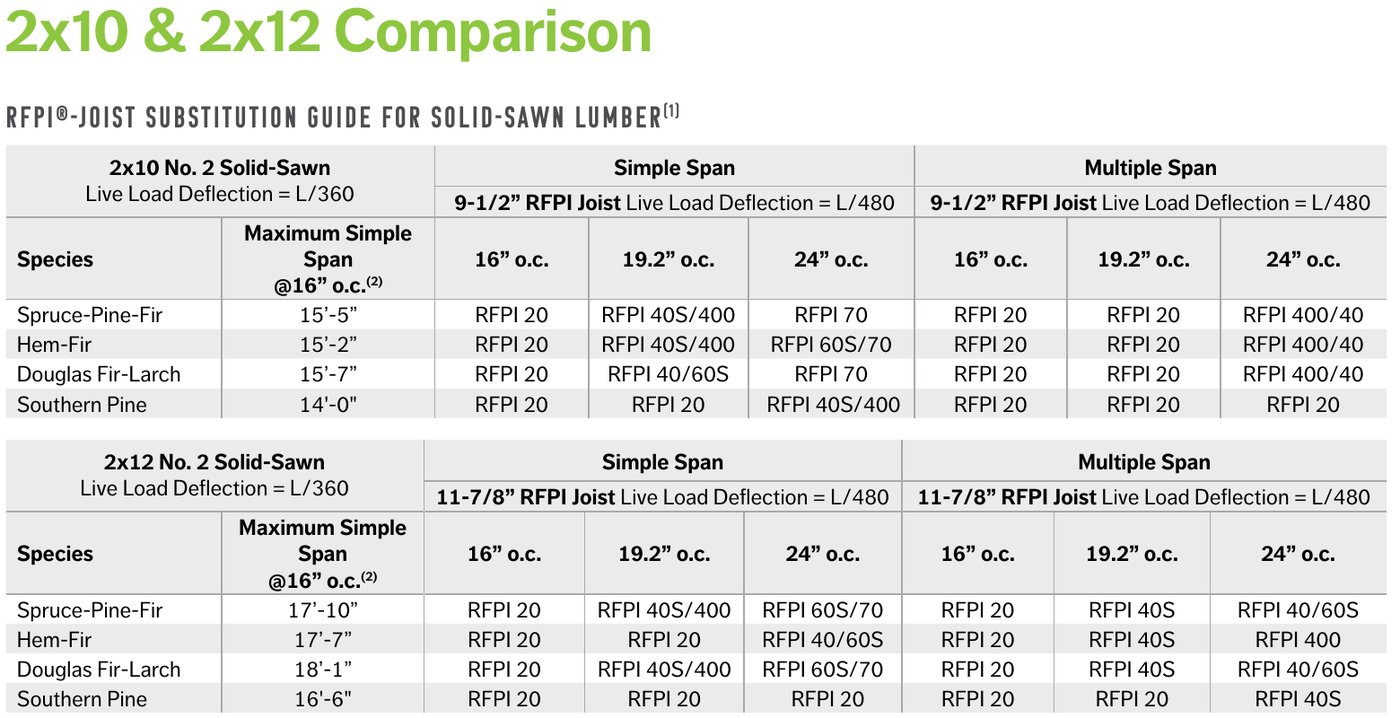
The floor. A sawn joist that shrinks a quarter inch pulls away from the subfloor, and the nail rubbing in its hole is the squeak. Under carpet it is an irritation; under tile or hardwood it is a floor that comes up. Roseburg and onCENTER both say the same thing about their I-joists in their own words: they do not warp, twist, shrink, or crown, and the floor has fewer squeaks and fewer callbacks. They also both design their floors a third stiffer than the code minimum, because a floor built to the minimum, Roseburg says, may not meet what the occupant expects. The bounce the owner feels in the great room is not a code violation. It is a phone call.
The question is not which lumber is cheaper per piece. It is what each frame costs per house once the callbacks are counted.
Bring two quotes. We do not put prices on the site.
Get a per-piece quote for the framing you are being told to buy and one for the framing you would rather use: green against kiln-dried, stud grade against No. 2, sawn 2x12s against I-joists, whatever the two choices are. Enter how many pieces a house takes, or let the page figure it from the square footage. Then enter your own callback rate per house with each, and what one callback costs you. The questions below say what the makers publish; the numbers are yours.
The calculator charges the material per house, adds the expected callback cost per house for each, and shows the difference both on the bid and after callbacks. It does not know which lumber you are comparing. It only knows arithmetic.
Terms to start from, not to stop at.
Dimension lumber: the grading rules require 2-inch Southern Pine to be dried to 19 percent or below before it is stamped KD19, and the SFPA says the average piece leaves the mill at about 15 percent and settles in a house at about 12. Shrinkage is about 1 percent per 4 points. No grading agency publishes a callback rate.
Treated lumber: the Wolmanized warranty covers termites and decay for as long as the original owner holds the house, pays for wood and not labor, and excludes warping and twisting. KDAT lumber has been dried again after treating.
Engineered wood: Roseburg says its I-joists will not warp, twist, or shrink, are made without camber, and give a floor with fewer squeaks. onCENTER says the same and prints "fewer costly callbacks" in its guide. Both design floors to L/480, a third stiffer than code, and both assume a glued subfloor. Neither publishes a callback rate either; they publish the reason the rate is lower.
Cost Over Time
Two frames, one house, your numbers.
Nothing you type here is sent anywhere. It runs in your browser.
Before You Price Lumber
Know what you are framing with.
Three short reads on framing lumber and engineered wood. Written for the builder who has to answer to the money, and for the money.
Frequently Asked
Framing callbacks, answered.
Why do drywall cracks and nail pops show up the first year?
Why do doors and cabinets go out of square after a house is built?
What makes a floor squeak, and how does engineered wood stop it?
What does a framing callback actually cost?
Stop By the Desk
Let’s talk it through in person.
Bring your plans or just your questions. We’ll get you squared away.
119 Cumberland St, Ashland City. The coffee’s on.