
The second siding job
is the expensive one.
Siding is priced by the square foot and paid for by the year. The bid shows what the first job costs. This page is about what a wall costs per year it keeps the weather out and the house looking kept, and it is written for the person funding the build as much as the person building it.
Three costs that never make the spreadsheet.
The paint. A primed board gets painted on the wall and then again when the paint quits, every coat a painter, a lift, and a week of the house wrapped in tape. A factory finish pushes the first repaint out to the far side of a 15-year finish warranty and sometimes past it. Vinyl never gets painted. Real wood gets painted the most. None of that is on the bid, and over twenty years it is not small.
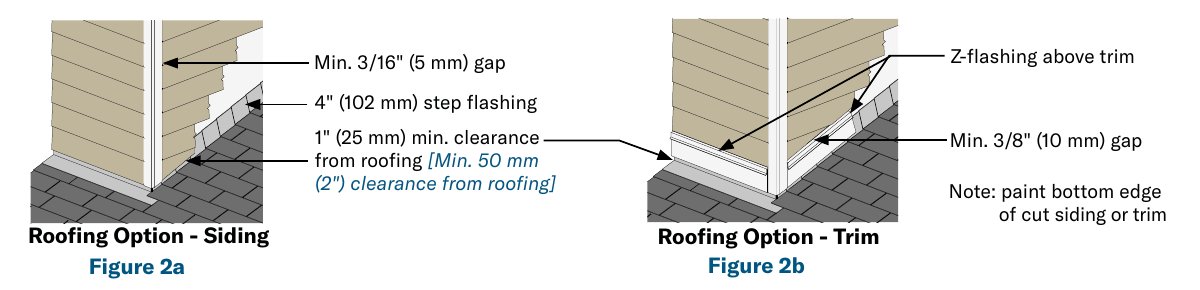
The bottom courses. Siding does not fail across the whole wall. It fails at grade, along the deck and the roof line, and at the joints, which is why every maker's instructions are mostly drawings of those places. When the bottom courses rot because the clearance was not kept or the kick-out was skipped, the trim comes off, then the courses, and the sheathing gets opened up. It is a second job on a house that is occupied, at a later year's prices, and the warranty names it as an installation problem and steps aside.
The tear-off and the resale. The second siding job starts by paying to remove the first one. And between the two jobs the siding is what the street sees: a builder's callback on buckled vinyl or a cracked corner is a callback with your name on it, and for an owner the inspector's note about soft trim at the bottom of the wall is a repair credit on the closing statement. Neither one is a line on the bid, and both are real money.
The question is not which siding is cheaper. It is what each wall costs per year it does its job.
Bring two quotes. We do not put prices on the site.
Get an installed quote per square foot of wall for the siding you are being told to buy and one for the siding you would rather hang. Enter the wall area, both quotes, and how long you expect to own the house. Then enter the service life you believe for each, the upkeep you expect per square foot in an average year (a repaint spread across the years between coats, or nothing on vinyl), and what a tear-off costs per square foot when the day comes. The questions below give the terms the makers publish.
The calculator charges upkeep every year, counts a replacement and a tear-off whenever a siding's life runs out inside your hold, and credits the unused life of whichever wall is still good when you sell. The result is what each choice costs over the hold, and per square foot per year of service.
It does not know which sidings you are comparing. It only knows arithmetic.
Terms to start from, not to stop at.
Engineered wood: LP SmartSide is warranted 50 years on the board, with the first 5 years paying labor and material and the rest prorated; ExpertFinish adds 15 years on the finish. Primed product has to be painted within 180 days.
Fiber cement: James Hardie is 30 years non-prorated on the board and 15 on the ColorPlus finish. Nichiha is 30 years prorated on the board. Primed Hardie has to be painted within 180 days; Nichiha allows 12 months.
Vinyl: CertainTeed and Royal warrant the panel for the original owner's lifetime, with fade measured against a number. Neither publishes a service life in years, and no siding maker we sell publishes one; the calculator asks for the number you would defend to a buyer.
Metal: GingCo board and batten is a coil-coated steel panel, quoted to order. Ask us for the coating sheet for the color you pick.
Cost Over Time
Two sidings, one house, your numbers.
Nothing you type here is sent anywhere. It runs in your browser.
Before You Price Siding
Know what you are wrapping the house in.
Three short reads on siding and the sheathing under it. Written for the builder who has to answer to the money, and for the money.
Frequently Asked
Siding cost over time, answered.
How often does siding need to be repainted?
Why does siding rot at the bottom, and what does it cost?
What is the tear-off on a siding job?
Does siding affect resale or insurance?
Stop By the Desk
Let’s talk it through in person.
Bring your plans or just your questions. We’ll get you squared away.
119 Cumberland St, Ashland City. The coffee’s on.