
What you are paying for
in siding.
Siding is the biggest surface on the house and the one that takes the weather. Two walls can look the same the day the crew leaves and be twenty years apart in when one gets redone. The difference is the board and its finish, the details at the bottom and at the joints, plus the trim and the sheathing under all of it. Every one of them you can check on a sample in our showroom.
Five materials. Each one fails a different way.
Engineered wood is wood strands, sized and layered, with resins and waxes and zinc borate worked all the way through, then a resin-saturated overlay bonded to the face and the edges sealed at the mill. That is LP's own description of SmartSide, and its code report says the same thing in plainer words: a treated wood substrate with an overlay bonded on. The zinc borate is the termite and decay treatment; LP has had test boards in the ground in Hilo, Hawaii since 1996 and reports no structural damage from Formosan termites. The 38 Series lap is 3/8 inch thick, 16 feet long, and weighs about 1.5 pounds a square foot. It cuts like wood and nails like wood. What it is afraid of is the same thing wood is afraid of: standing water at a cut edge, which is why every detail in the next section exists.
Fiber cement is Portland cement, sand, and cellulose fiber pressed into a board. James Hardie prints that recipe in its catalog; Nichiha says its boards are made mostly of fly ash. Both are 5/16 inch thick on the lap product and 12 feet long, and both weigh a bit over 2 pounds a square foot, which is why the crew moves it with two people and why a broken corner on delivery is the thing to watch for. It will not burn and termites have no use for it. Hardie builds its boards by climate zone; Middle Tennessee is HZ5, and the submittal sheet says 9-1/4 and 12-inch widths in that zone come primed only. It is cut with a saw and a dust collector, and both makers print a silica warning on every document for that reason.
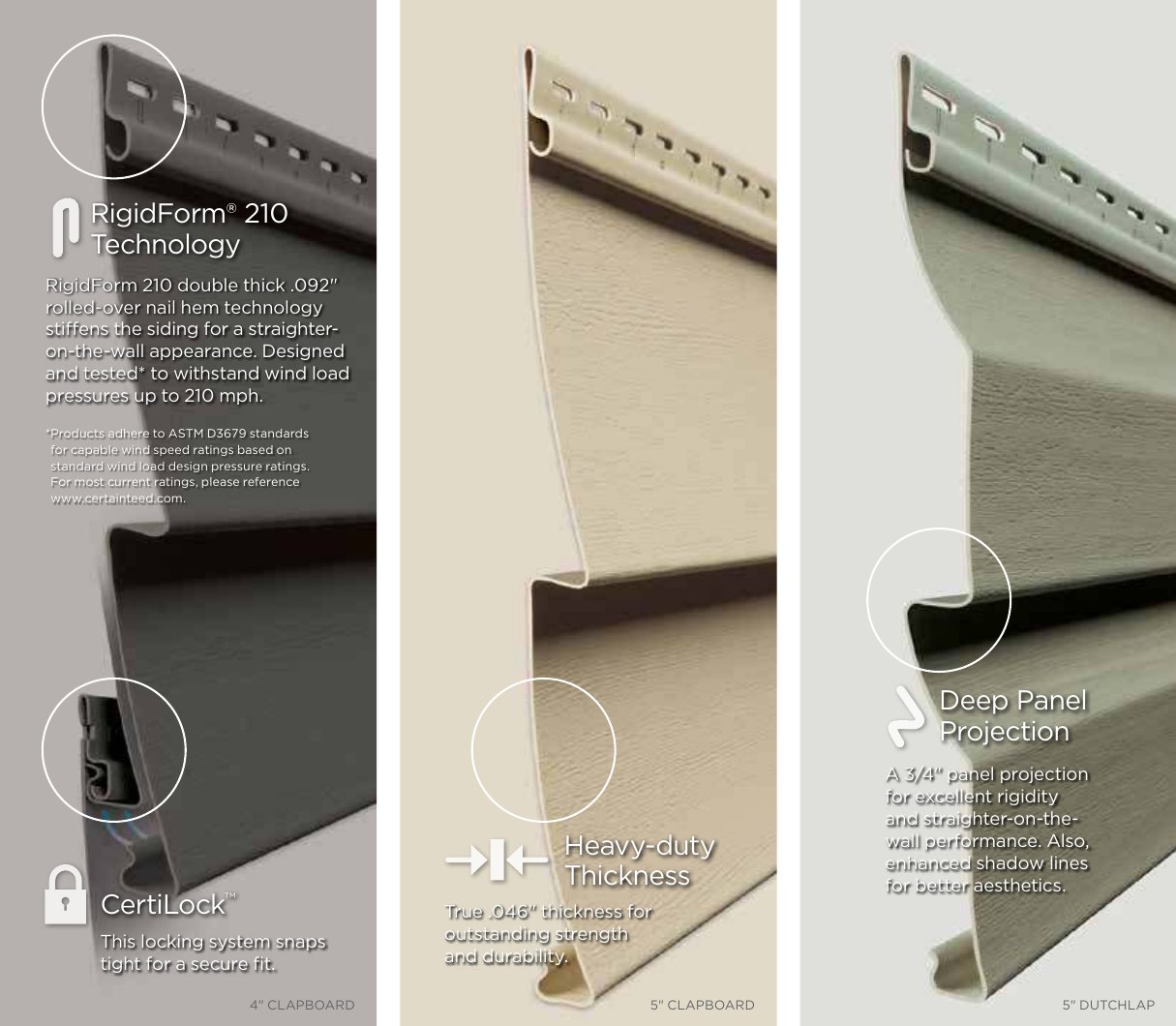
Vinyl is an extruded panel, and the number that matters is thickness. CertainTeed Monogram is .046 inch, MainStreet is .042; Royal Woodland is .046, Estate .044, Residential .042, Royal Crest .040. The rest of the value is in the shape: a rolled-over or double nail hem so the panel hangs straight, a lock at the bottom that snaps to the course below, and a deep projection so the shadow line holds. Vinyl does not rot and does not need paint. It does move with heat, which is why the whole installation method is about letting it move, and every maker prints the same caution: near enough flame or heat it softens and melts.
Real wood, cedar lap or shingle, is the look everyone is copying. It needs a finish, and it needs the finish kept up. We sell it. We will tell you the same thing about it that we tell you about a wood door: put it under a porch or on a house that will be maintained.
Metal board and batten is rolled from coil. The GingCo Board & Batten profile we carry comes in 29 or 26 gauge, with a Sherwin-Williams WeatherXL coil coating in more than 20 colors. The steel is the steel; the gauge and the coating are what you are paying for, same as a metal roof. Midway keeps a limited quantity on the yard and quotes the rest to order.
Pick up the end of each board. Look at the cut edge of the engineered wood for the overlay and the strands under it. Feel the weight of the fiber cement. Fold the vinyl sample and look at the hem; a rolled-over hem is two thicknesses, a plain hem is one. Ask what the thickness is on the exact line on the quote, not the brand.
Painted at the factory, or painted on the wall.
Engineered wood and fiber cement both come two ways. Primed means a factory primer and a painter. LP's instructions say 100 percent acrylic exterior paint, two coats, within 180 days, no stain and no vinyl-based paint. James Hardie says 180 days and 100 percent acrylic, no stain or oil paint. Nichiha gives you 12 months. That deadline is not a suggestion; it is written into the warranty conditions, and a house that sits primed through a winter has already spent some of its life.
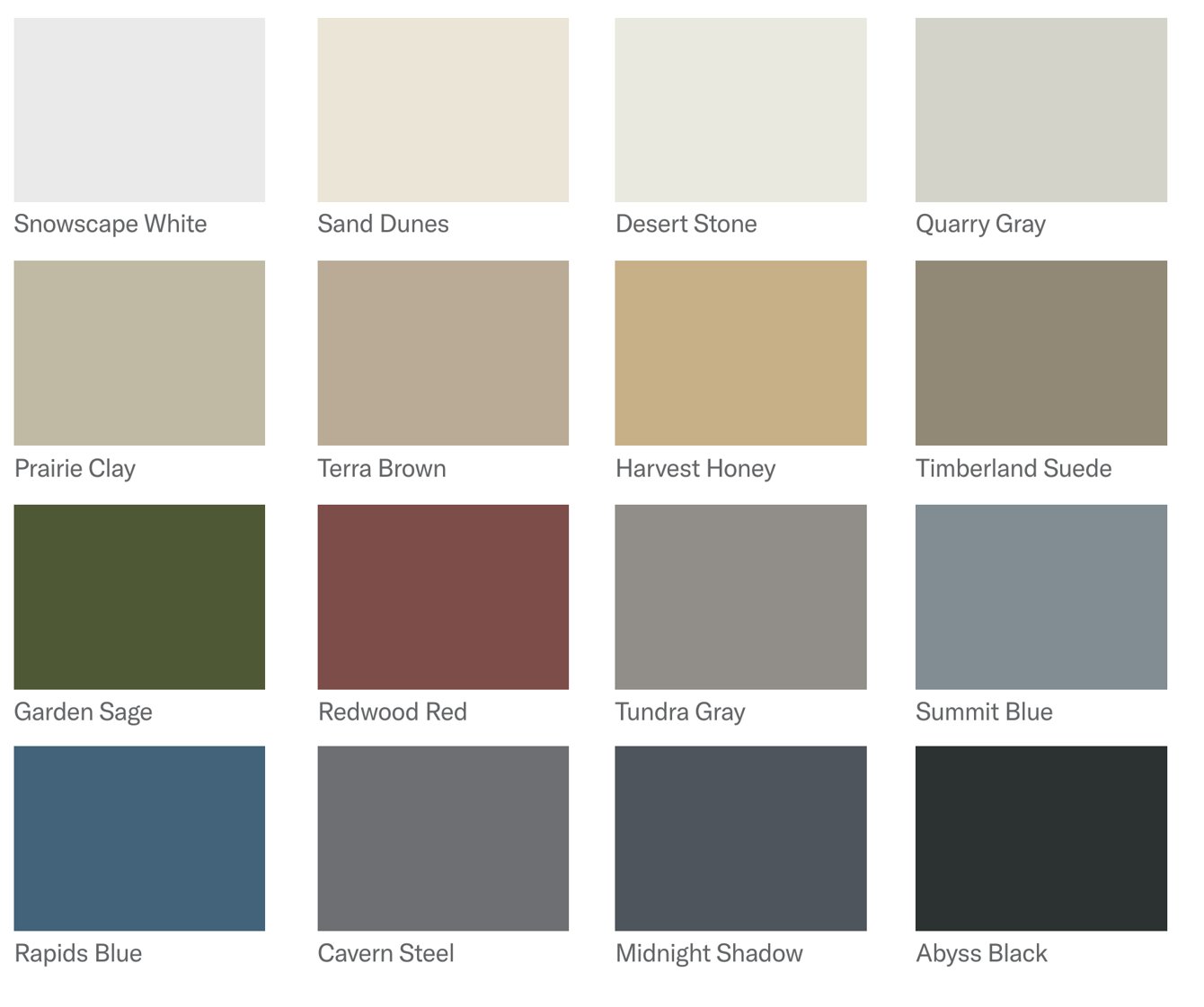
Factory-finished means the color is on when the board comes off the truck. LP ExpertFinish is an acrylic finish cured in an oven, in 16 core colors plus a six-color Naturals collection new in 2026, and it carries a separate 15-year finish warranty. Hardie ColorPlus is baked on, applied to the face and the edges, in 19 stocked colors and a made-to-order library of several hundred more, with its own 15-year finish warranty. Sixteen colors is a real limit and it is also the point: what you get for it is a finish cured under conditions no painter on a lift can match, and a warranty on the color that a field paint job does not come with.
What "16 colors" means for touch-up is the honest part. Every cut end and nail head gets touched up from a kit in the same color, and LP's instructions are specific about it: scratches under an inch, nail heads, small nicks, and nothing bigger than 3/4 inch across; anything bigger gets a new board. Hardie's kit is figured at about one per 4,000 square feet of siding and Hardie does not warrant anyone else's touch-up paint. Hardie also says not to caulk nail heads or butt joints on ColorPlus, because caulk weathers at a different rate than the finish. Read the ExpertFinish joint detail in the next section; it is designed so you do not caulk there either.
Vinyl's color is in the material, so there is no finish to keep up. What its warranty covers instead is fade, measured against a number, and Lesson 2 shows how to read that.
Look at the cut end of a factory-finished sample and then the face. Ask to see the touch-up kit and the edge coater. On a primed sample, ask who is painting it and when, and whether that date is on the schedule. On the quote, look for the finish warranty as a separate line from the board warranty.
The bottom course, the joints, and the flashing decide the lifespan.
Siding does not fail in the middle of the wall. It fails at the bottom, at the joints, and where a roof or a piece of trim meets it. The makers know this, and their installation instructions are mostly about those places. Here is what they say, and it is close to the same from all of them.
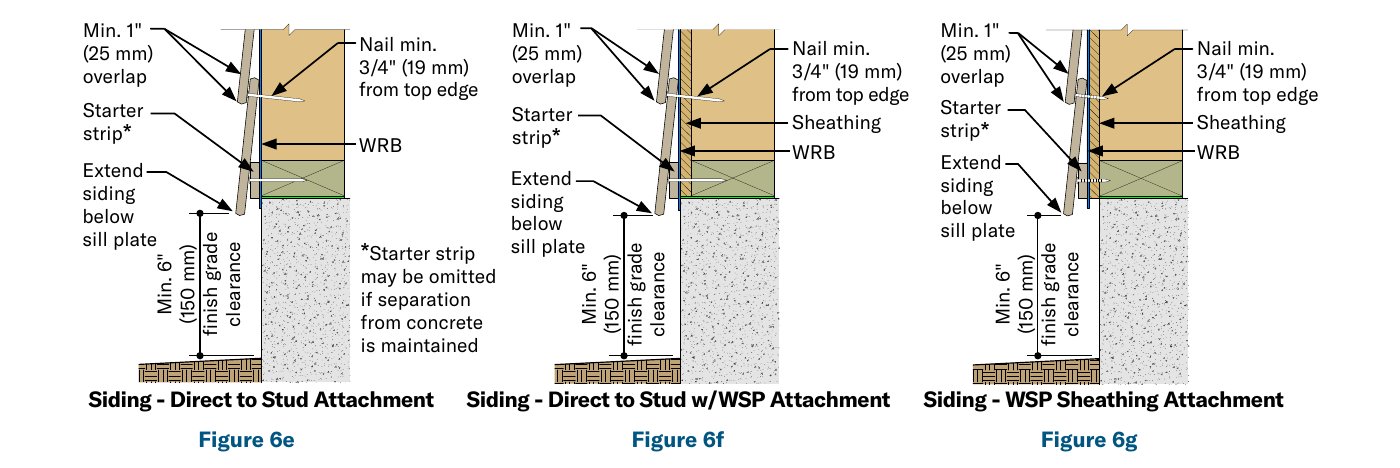
Clearance. Six inches from the bottom of the siding to finished grade. LP, Hardie, Nichiha, and CertainTeed all print it. Off a roof, deck, porch, or slab: LP says 1 inch, Hardie 2 inches, Nichiha 1 to 2. None of them allow the siding to touch concrete, block, brick, or mortar; LP wants a 3/8-inch gap with backer rod and caulk there. The bottom course sits on a starter strip so it kicks out at the same angle as every course above it.
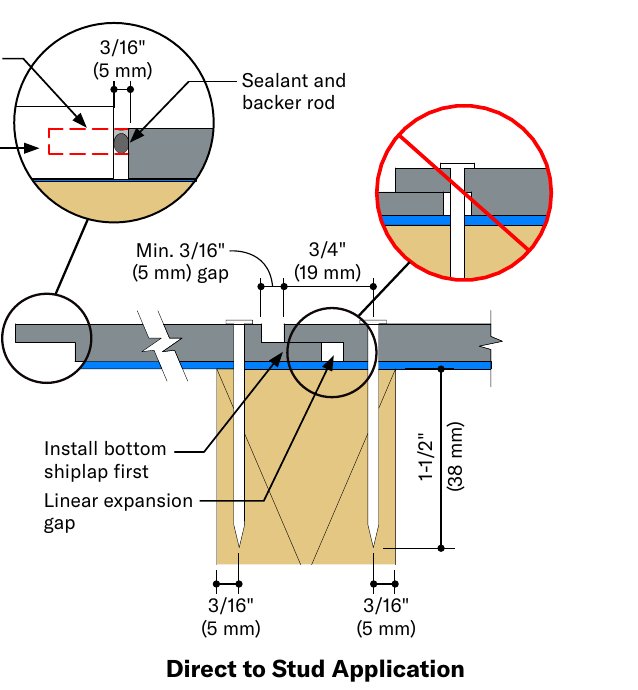
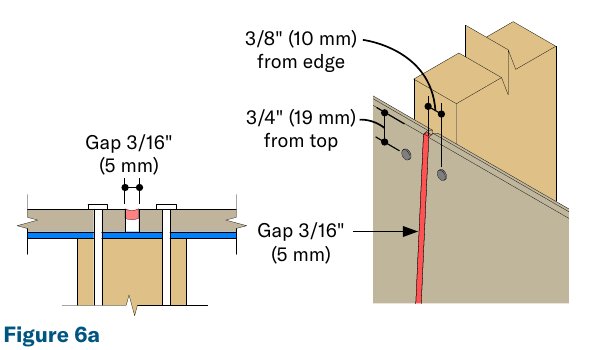
Butt joints. LP gives four choices on primed lap: a 3/16-inch gap caulked with an ASTM C920 Class 25 sealant, a joint moulding, or an open joint over flashing at least 4 inches wide with the factory ends kept and re-primed. On ExpertFinish lap the boards come with a shiplap end; you set the bottom half first, leave the 3/16 gap, and do not caulk. Hardie prefers joint flashing behind a lightly butted joint. Nichiha wants flashing at least 3 inches wide. Joints land on studs and get staggered. Ends get primed or painted before they go up; both fiber cement makers say never leave a cut edge bare.
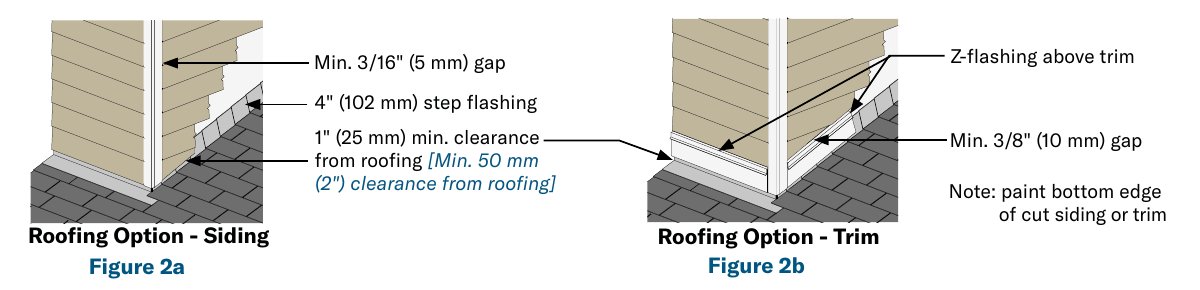
Flashing at horizontal trim. Each horizontal piece of trim, each window head, and each band board gets a drip cap or Z-flashing over it, and the siding above it stops short of the flashing. LP says leave 3/8 inch and do not caulk it. Hardie and Nichiha say 1/4 inch and do not caulk it. That open gap is on purpose; it is the drain. Where a roof dies into a wall, step flashing with a 4-inch leg goes up behind the siding and a kick-out throws the water into the gutter. Hardie sizes the kick-out at 4 by 4 inches. LP prints in bold not to run siding or trim inside it.
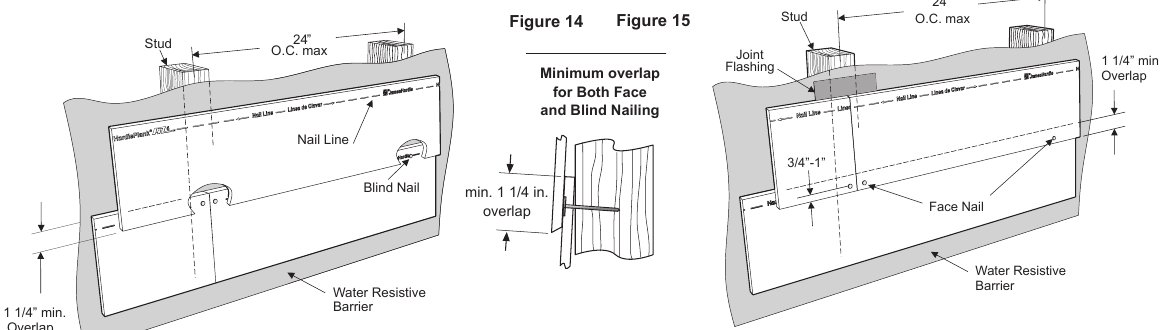
Nails. On LP lap: a hot-dip galvanized nail at least .092 inch, 3/4 inch from the top edge, 3/8 inch from the ends, one per stud, 1-1/2 inches into framing, and never nailed from the ends toward the middle. Snug, not sunk; a blind nail buried more than 1/8 inch gets a new nail beside it. Hardie and Nichiha: blind nail 3/4 to 1 inch from the top, 3/8 from the ends, 1-1/4 inch overlap, and do not mix blind and face nailing on the same wall. Vinyl is the opposite of all of this: nail in the center of the slot, leave 1/16 to 1/8 inch under the head so the panel hangs, and leave a 1/4-inch gap at every piece of trim so it can move. A vinyl panel nailed tight buckles the first hot day.
Behind it all, a water-resistive barrier. LP, Hardie, Nichiha, and CertainTeed each say it is required and each says in almost the same words that they are not responsible for water that gets past the siding. A furring strip or a drainable wrap behind the board, what the trade calls a rainscreen, is an option LP shows in its wall drawings and specs; it is a good one on a wall that faces the weather.
Ask for the bottom course detail and the joint detail in writing. Is there a starter strip. What goes behind the butt joints. Is there a drip cap over every window and band board. Is the kick-out on the order. A quote that lists squares of siding and nothing else has left the parts that rot to chance.
Corner boards, fascia, and soffit from the same system.
The trim is what the eye lands on and what the joints depend on. LP sells it as a matched line: trim and fascia in three thicknesses (19/32, 3/4, and 1 inch, which LP calls the 190, 440, and 540 Series), soffit in vented and closed panels, and outside corners, all with the same treated substrate and overlay as the siding and the same warranty. The thickness matters at the corners. LP's instructions say to use the 3/4 or 1-inch trim where siding runs into it, so the board does not stand proud of the corner, and to leave a 3/16-inch gap sealed with caulk. On panel siding, LP wants the thicker trim for battens for the same reason.
James Hardie and Nichiha sell trim and soffit in their own fiber cement, and Nichiha's carries a 25-year warranty against the 30 on its siding. Vinyl trim is J-channel, corner posts, and starter, and the CertainTeed guide is specific about the gaps at each one. GingCo rolls its own trim profiles in the same coil color as the metal panels. Whichever line you pick, buy the trim from it: mixing makers at the corners is where the warranty gets complicated and the caulk lines get long.
Hold a piece of lap siding against a piece of trim at a corner and see which one stands proud. Ask which trim thickness is on the quote. Ask whether the soffit is vented.
The wall under it has a stamp. Read it.
Everything above sits on a structural panel nailed to the studs, and the panel has a trademark from APA, the engineered wood association, that tells you what it is. The stamp shows six things: grade (Rated Sheathing); span rating (24/16 is the common wall panel: the first number is the roof support spacing it is rated for, the second is floor); bond class; thickness category; mill number; and the standard it was made to. Rated Sheathing can be OSB or plywood; APA says the same grade and rating can be manufactured as either. The 7/16 category on 16-inch studs is the residential wall standard, and APA's own table nails it 6 inches on the edges and 12 in the field with 6d or 8d common nails, with a 1/8-inch gap at every panel edge so it can swell without buckling.
The bond class is the line to read. Exposure 1 means the panel is made with exterior glue and will take the rain it gets during construction, and APA's guide says plainly it is for uses not involving long-term exposure to weather. Exterior means it can be wet and dried over and over. Almost all wall sheathing is Exposure 1, which is fine, because the siding and the wrap are supposed to keep it dry. APA also warns that "CDX" plywood is sometimes mistaken for an Exterior panel and is not one. LP's panel siding, by the way, is itself a structural panel: ESR-1301 lets it serve as wall bracing in place of sheathing. LP's lap siding cannot.
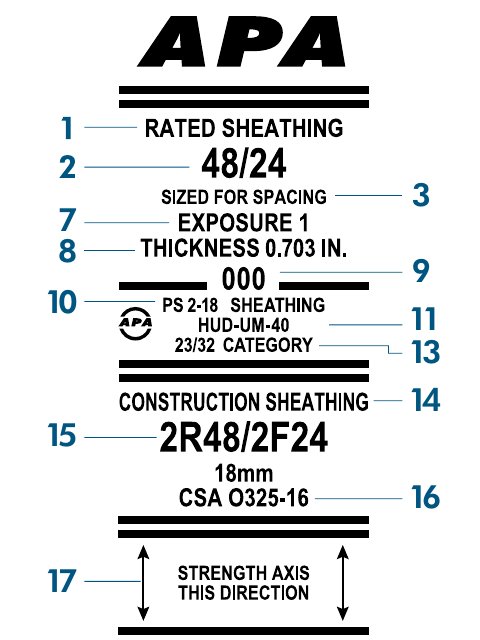
Read the stamp on the sheathing bunk. Rated Sheathing, the span rating, Exposure 1, the thickness category. If the quote says 7/16 OSB and the stamp agrees, that is a spec. If the stamp is missing, that is a question.
This is the checklist.
| Feature | What lasting siding has | What to ask |
|---|---|---|
| Board | Treated strand board with a bonded overlay and sealed edges; or 5/16-inch fiber cement; or vinyl at .044 to .046 with a rolled-over hem | What is the thickness on this exact line? Show me the cut end. |
| Finish | Factory finish cured at the plant with its own warranty, or a primed board with a painter and a date inside the maker's window | Who paints it and by when? Is the finish warranty a separate line? |
| Bottom course | 6 inches to grade, 1 to 2 inches off roofs and decks, a starter strip, no contact with concrete or masonry | What is the clearance detail? Is the starter strip on the order? |
| Joints | Flashing or sealant behind every butt joint, joints on studs and staggered, cut ends primed | What goes behind the butt joints? |
| Flashing | Drip cap over every window and horizontal trim with the gap left open, step flashing at roofs, kick-out at every eave-to-wall | Is the kick-out on the order? Who is leaving the gap open? |
| Nails | Hot-dip galvanized, placed per the maker's drawing, snug not sunk; vinyl loose in the center of the slot | Which nail? Blind or face, and not both? |
| Trim | Same maker as the siding, thick enough that the siding does not stand proud of it | Which trim thickness at the corners? |
| Sheathing | APA Rated Sheathing, 7/16 category, Exposure 1, WRB over it, 1/8-inch panel gaps | Show me the stamp. |
All five are good siding. Pick on purpose.
Vinyl on a rental or a house that has to be done this month is the right call, and Midway sells a lot of it. Fiber cement is the board that will not burn and does not care about termites, and Nichiha is stocked deep on our yard. Cedar under a porch on a house that will be kept up is beautiful. Metal board and batten on a shop, a barn, or a modern build looks right and outlasts most of what is around it. Engineered wood is the one we recommend when someone asks for the long siding on a house: it goes up like wood, it comes finished, and its warranty is written out to 50 years in a table you can read. Lesson 2 reads that table.
None of the five is wrong. What is wrong is buying the cheaper one without knowing what you gave up, or the premium one without knowing what you bought. Bring the checklist. We keep cut samples of every line on the floor, and we spec the whole envelope in the design studio, so the siding on the quote is the siding that shows up with the trim and the flashing to go with it.
Before You Price Siding
Know what you are wrapping the house in.
Three short reads on siding and the sheathing under it. Written for the builder who has to answer to the money, and for the money.
Frequently Asked
Siding construction, answered.
What is engineered wood siding made of?
What is the difference between factory-finished siding and primed siding?
How far does siding have to be off the ground?
What is a butt joint on lap siding and why does it matter?
What is kick-out flashing?
What is the APA stamp on OSB sheathing?
Come See It
Put your hands on it first.
Specs only tell you so much. Come walk the yard and the showroom.
119 Cumberland St, Ashland City. The coffee’s on.