
The repaint
is the expensive one.
Trim is priced by the linear foot and paid for by the year. The bid shows what the sticks and the carpenter cost once. This page is about what the finish package costs per year it keeps the corners tight and the bottom of the wall dry, and it is written for the person funding the build as much as the person building it.
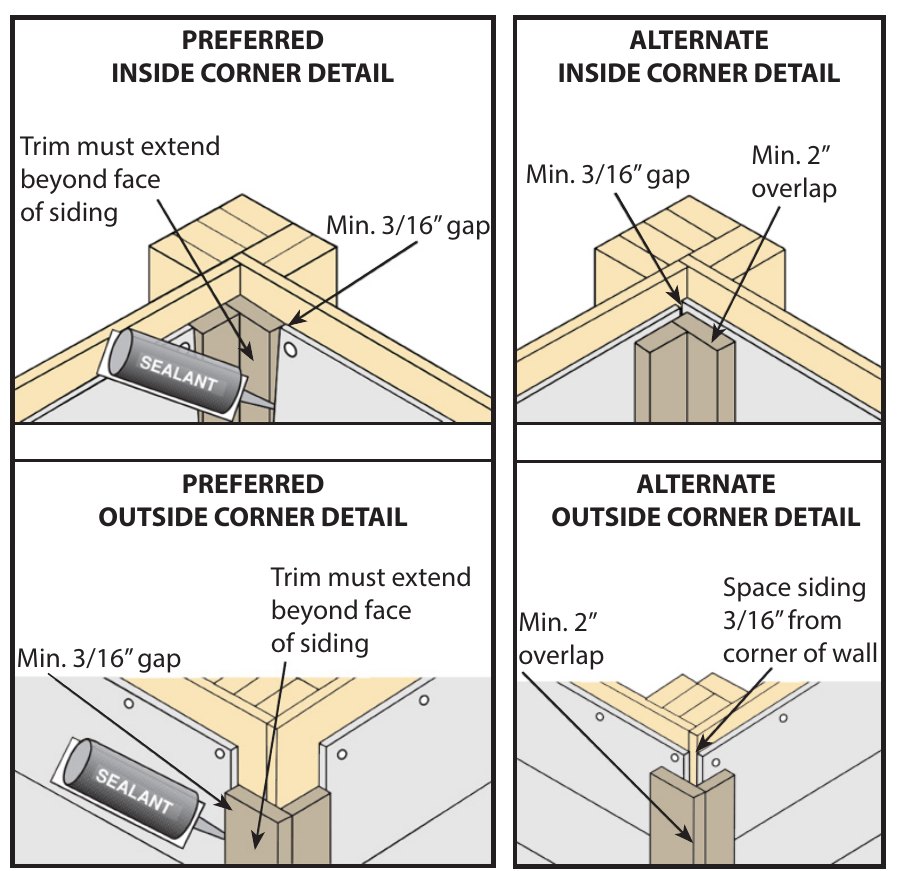
Three costs that never make the spreadsheet.
The repaint. Exterior wood trim is painted once on the wall and again every time the paint quits, and each time it is a painter, a ladder, and the caulk cut out and redone at every joint. AZEK and VERSATEX both say the reason is moisture cycling in the wood under the paint, and that paint lasts longer on their PVC because there is almost no moisture in it. Unpainted white PVC skips the cycle entirely. None of that is on the bid, and over twenty years the painter is the biggest number on this page.
The bottom of the wall. Wood trim does not fail in the middle of a run. It fails at the cut end sitting on the step, the slab, or the ground, which is why LP's instructions are mostly clearances: 6 inches to grade, 1 inch off anything flat, 3/8 inch off brick, seal every cut. When a corner board goes soft at the bottom, it comes off, the siding edge behind it gets looked at, and a carpenter and a painter both come back. The warranty names it as an installation problem and steps aside. PVC and poly-ash are rated by their makers for ground contact, so on those the bottom of the wall is not a line at all.
The callback. Inside, the miter that opened because the sticks went up the day they arrived. Metrie's 3-day rule exists for exactly that. Outside, the fascia joint that gapped in July because the PVC was nailed up cold with no glue in it. Both are small, both are on a house that is lived in, and on a spec house both have the builder's name on them. Neither is a line on the bid.
The question is not which trim is cheaper. It is what each finish package costs per year it does its job.
Bring two quotes. We do not put prices on the site.
Get an installed quote per linear foot for the trim you are being told to buy and one for the trim you would rather hang. Enter the linear feet, both quotes, and how long you expect to own the house. Then, for each one, the service life you believe, what a repaint or repair visit costs for that trim (the painter's number, or the carpenter's, for the whole package), and how many years between those visits. The questions below give the terms the makers publish.
The calculator charges a repaint or repair every cycle that lands inside your hold, counts a replacement whenever a trim's life runs out inside the hold, and credits the unused life of whichever trim is still good when you sell. The result is what each choice costs over the hold, and per foot per year of service.
It does not know which trims you are comparing. It only knows arithmetic. Put a zero in the repaint cycle for trim you will never paint, and be honest about the one you will.
Terms to start from, not to stop at.
Cellular PVC: AZEK warrants its trim for the lifetime of the product against rot, split, splinter, delamination, warp, and swelling, with paint and ordinary weathering excluded and no labor paid. VERSATEX describes its warranty as lifetime, fully transferable, and non-prorated. Neither needs paint; both put an LRV rule on any color you choose.
Poly-ash: TruExterior publishes a 20-year limited warranty, comes primed, and must be painted within 150 days. Rated by its maker for ground and masonry contact; cut ends need no primer.
Engineered wood: LP SmartSide trim and fascia are on the 50-year prorated warranty, labor and material through year 5 and material only after, with the finish coat due within 180 days and every cut sealed.
Interior wood and MDF: The makers publish handling rules rather than terms: 3 days in the room before nailing, and no MDF where it may get wet. No interior trim maker we sell publishes a service life in years. The calculator asks for the number you would defend to a buyer.
Cost Over Time
Two trim packages, one house, your numbers.
Nothing you type here is sent anywhere. It runs in your browser.
Before You Price Trim
Know what you are finishing with.
Three short reads on trim and moulding. Written for the builder who has to answer to the money, and for the eye that sees it every day.
Frequently Asked
Trim cost over time, answered.
How often does exterior trim need to be repainted?
What does it cost when exterior trim rots at the bottom?
Why do interior miters open, and is that a cost?
Is unpainted PVC trim really maintenance free?
Stop By the Desk
Let’s talk it through in person.
Bring your plans or just your questions. We’ll get you squared away.
119 Cumberland St, Ashland City. The coffee’s on.