
The second barn
is the expensive one.
A barn is priced by the square foot and a fence by the foot, and both are paid for by the year. The bid shows what the first one costs. This page is about what a building costs per year it stands up straight and keeps the weather off what is inside, and it is written for the person paying for it as much as the person building it.
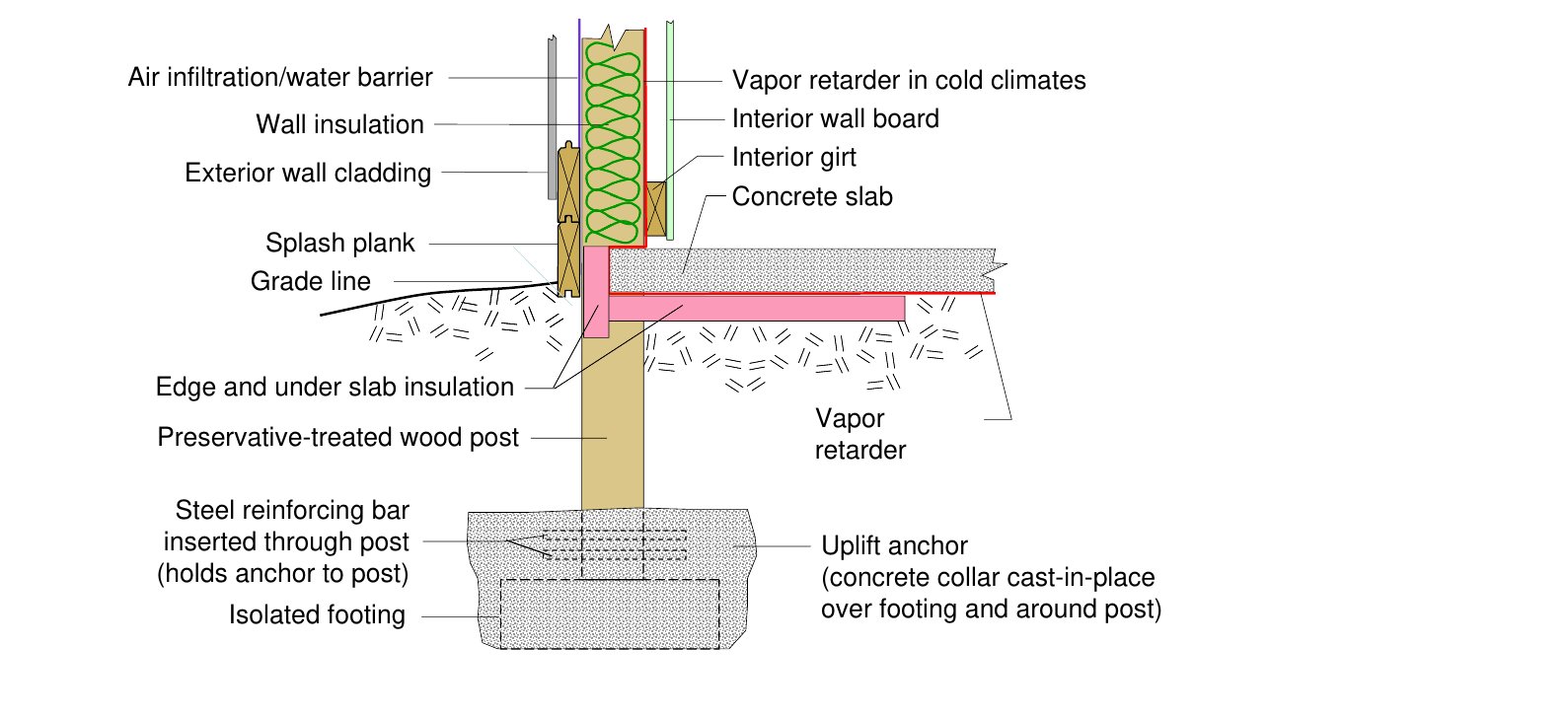
Three failures that never make the spreadsheet.
The post at grade. A barn post does not rot in the middle. It rots in the band a few inches above and below the dirt, where it is wet and has air. A fence-post rating, low retention, a cut end in the hole, or dirt and manure piled against the skirt board all show up there, and the Wolmanized warranty lists every one of those as a condition. When a post goes, the wall metal comes off and the roof is jacked, then the stub comes out of the ground and a new post or a steel bracket goes in. The warranty, when it applies, sends a post. The crew, the jacks, and the week are yours, at a later year's prices, while the barn is full.
The panel at the cut. The coating warranty is written on the film and the color. It is not written on the edge the crew cut or the screw that was driven crooked. A panel that fails at the eave gets replaced from the eave up, which on a barn with cut-to-length sheets means the whole sheet.
The fence that leans. Every foot of wire pulls on the corner post, and four or five strands is four or five pulls. A corner that is too small, too shallow, or not braced tips toward the pull in a few winters, the wire goes slack, and every line post down the run leans with it. A gate hung on a line post does the same thing faster. The fix is a new corner assembly and a re-stretch, and by then the animals have found the slack.
The question is not which barn is cheaper. It is what each building costs per year it does its job.
Bring two quotes. We do not put prices on the site.
Get a quote for the barn or fence you are being told to buy and one for the barn or fence you would rather put up. Enter the size, both quotes as a whole-job number, and how long you expect to own the place. Then enter the service life you believe for each, the upkeep you expect in an average year, and what it would cost to fix the failure that ends its life, or to take it down and put up the next one. The questions below give the terms the makers publish.
The calculator charges upkeep every year, counts a replacement and its demolition whenever a building's life runs out inside your hold, and credits the unused life of whichever building is still standing when you sell. The result is what each choice costs over the hold, and per square foot per year of service.
It does not know which barns you are comparing. It only knows arithmetic.
Terms to start from, not to stop at.
Treated posts: the Wolmanized warranty runs as long as the original owner owns the property, covers termites and decay only, replaces wood and not labor, and requires Heavy Duty on barn posts with no cut end in the ground. No maker we sell publishes a service life in years for a post; the calculator asks for the number you would defend to a buyer.
Laminated columns: UTD publishes a limited warranty against termites and fungal decay and a load table, and says the column does not twist and crack the way a drying solid timber does.
Metal: GingCo's panels carry a coil coating warranty split into film integrity and chalk and fade, in years, by the coil coater; ask us for the sheet for the color you pick. Panels are quoted to order, with a limited quantity of common panels and trim on the yard.
Wire and gates: Red Brand publishes the class of galvanizing and says Class 3 lasts 2.5 times as long as Class 1. Behlen and Tarter publish the tube, the confinement level, and the hardware. Neither publishes a year count.
Cost Over Time
Two barns, one farm, your numbers.
Nothing you type here is sent anywhere. It runs in your browser. It works the same for a fence: put linear feet in the size box.
Before You Price a Barn
Know what you are putting up.
Three short reads on pole barns, fencing, and outdoor structures. Written for the owner who has to answer to the budget, and for the weather.
Frequently Asked
Barn and fence cost over time, answered.
Why do pole barn posts rot at ground level?
Why does a fence lean in five years?
Does a longer-lived barn change what I pay for insurance or resale?
Stop By the Desk
Let’s talk it through in person.
Bring your plans or just your questions. We’ll get you squared away.
119 Cumberland St, Ashland City. The coffee’s on.